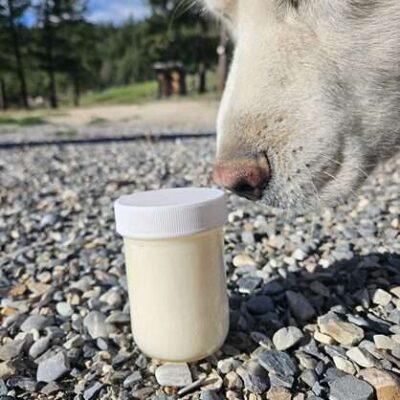
Homemade Tallow
Tallow, rendered beef fat, is one of the most versatile fats on Earth and can be used in ways you might not expect. While pre-made tallow can be pricey, beef fat is affordable and easy to get your hands on. Why buy tallow when you can render beef fat at home and create your own high-quality, multi-purpose fat? Let’s dive into the simple process of rendering beef fat and making your own tallow!
Ingredients
- 1 lb Beef Fat suet
- 1/4 cup Water optional
Instructions
- Prepare the Beef Fat: Store your beef fat in the freezer and remove it about 30 minutes before you plan to start rendering. This helps make the fat easier to chop.
- Chop or Grind: Cut the beef fat into small pieces as uniformly as possible, without spending too much time on it. Alternatively, you can use a meat grinder to grind the fat, which speeds up the process.
- Add Fat to Pot: Place the chopped or ground beef fat into a large, heavy-bottomed pot. Optional: add water to the pot to prevent burning at the beginning.
- Start Rendering on Low Heat: Turn the heat to low and begin the slow rendering process. Stir the fat every 5-10 minutes to prevent it from burning at the beginning.
- Increase Heat: Once you notice that some fat has accumulated at the bottom of the pot, you can safely increase the heat to low-medium. This will help speed up the rendering process and allow the fat to simmer, releasing any impurities.
- Stir and Monitor: Keep stirring every 10-15 minutes, and monitor the temperature to maintain a steady, moderate heat. The fat should be slowly simmering, but not bubbling or overcooking.
- Rendering Time: This process typically takes a couple of hours, depending on the amount of fat. You’ll know it’s done when there are no more small bubbles coming up and there are only small crispy bits left in the pot (these are called cracklings).
- Set Up Straining: Place a large fine sieve over a 2L glass measuring jug to catch the rendered fat.
- Strain the Fat: Pour the melted fat through the sieve into the jug, allowing the crispy bits (cracklings) to be caught in the sieve. Set the jug aside to let the fat cool slightly.
- Use a Smaller Sieve: To further purify the tallow, place a smaller, extra-fine sieve over one of your storage jars. Slowly pour the tallow from the jug through this smaller sieve to catch any remaining bits.
- Cool: Let the rendered tallow cool in the jars with the lids off. As it cools, it will solidify into a smooth, creamy texture.
- Seal and Store: Once the tallow has fully cooled and solidified, put the lids on the jars tightly. Store the tallow in a cool, dark place. If you want to keep it for a longer period, you can refrigerate or freeze it.