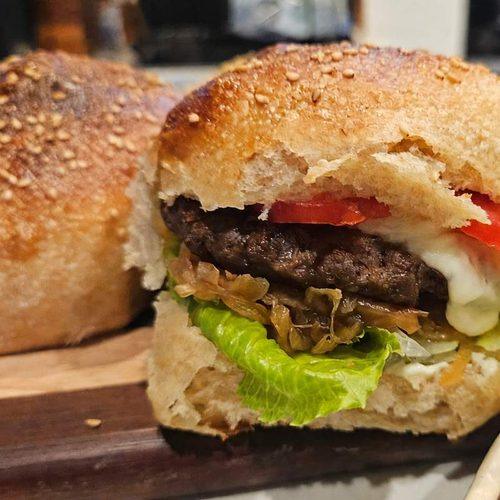
Whole Wheat Sourdough Burger Buns | Soft, Easy Recipe
Whole wheat sourdough burger buns are a summer essential—soft, squishy, and sturdy enough to hold up to any juicy burger, stacked toppings, and flavourful sauces.
ingredients
- 125 g Whole Wheat Flour
- 175 g Bread Flour
- 25 g Sugar
- 150 g Active Sourdough Starter
- 50 g Butter
- 150 g Milk warm
- 1 Egg
- 10 g Salt 2 tsp
Egg Wash
- 1 Egg whisked
- Sesame Seeds optional (sprinkled on top)
instructions
- In your mixing bowl, whisk together warm milk, sugar, egg, and sourdough starter. The milk should be warm to the touch but not hot, around 95-100°F (35-38°C). Add whole wheat flour, bread flour and salt. Using the dough hook attachment, mix on Speed 2 for 1-2 minutes until a shaggy dough forms. Add the butter a few small pieces at a time and mix on Speed 4 for 2-3 minutes until the dough comes together and pulls away from the sides of the bowl. Cover and rest for 1 hour.
- After the rest, perform stretch and folds until the dough is tight and smooth. Cover and ferment until doubled, 4-6 hours in a warm environment or 6-12 hours in a cool one.
- Once doubled, turn the dough onto a lightly floured surface and divide into 8 equal balls (80-90g each). Shape each into a tight ball, then gently flatten with your palm into a round about 2cm (¾ inch) thick. Place in your baking vessel*, spaced a few centimetres apart.
- For long ferment: cover and refrigerate up to 24 hours, then rise at room temperature for 2-3 hours until doubled and puffy.For same-day bake: cover and rise at room temperature for 2-3 hours until doubled and puffy.
- Preheat oven to 375°F (190°C). Once the buns are puffy and ready, brush the tops gently with egg wash and sprinkle generously with sesame seeds. Bake uncovered for 20-25 minutes until deep golden brown.
- Cool completely before slicing so the crumb sets and the buns hold up to a juicy burg.
notes
*The photos show a 9x13" baking pan. It works well for a long ferment because the sides let you cover it without the cover touching the dough, which a baking sheet can’t do. The pan is slightly small for this much dough, so the buns bake into each other and come out a little squared off instead of perfectly round. I don’t mind, they taste just as good. If you’re baking the same day, or you want perfectly round buns, use a baking sheet and space them apart.
I typically mix this dough in the evening, let it ferment overnight, then shape and bake in the morning. Enriched doughs are more forgiving with fermentation, so the timing doesn’t need to be exact.